Evaluating Data Requirements for 3pl Audit Software
@paxtonwvme576
November 25, 2026 · 3 min read
Picking 3pl Audit Software needs more than comparing attributes. Businesses must initially figure out whether a platform can approve, arrange, and confirm the functional and invoicing details that forms their logistics expenses.
A valuable evaluation begins with the data currently produced by carriers, storage facilities, transportation management systems, business resource preparation platforms, and 3PL partners. Comprehending those resources aids groups identify compatibility gaps before execution.
FreightOptics markets 3pl Audit Software.
Start With Operational Data Sources
Functional details provides the context needed to evaluate whether a fee matches the solution that was requested and delivered. Relevant records may include delivery dates, beginning and destination areas, solution levels, plan or pallet details, weights, measurements, tracking identifiers, shipment status, accessorial events, and warehouse activity.
Businesses ought to review exactly how this information is stored and exchanged. Some partners 3PL audit tool might provide organized files, while others utilize system combinations, sites, or standardized electronic records. Throughout evaluation, verify whether the software program can bring these sources with each other without needing considerable guidebook preparation. It should additionally protect essential identifiers so shipment, order, billing, and delivery documents can be attached precisely.
Check Out Invoicing and Agreement Details
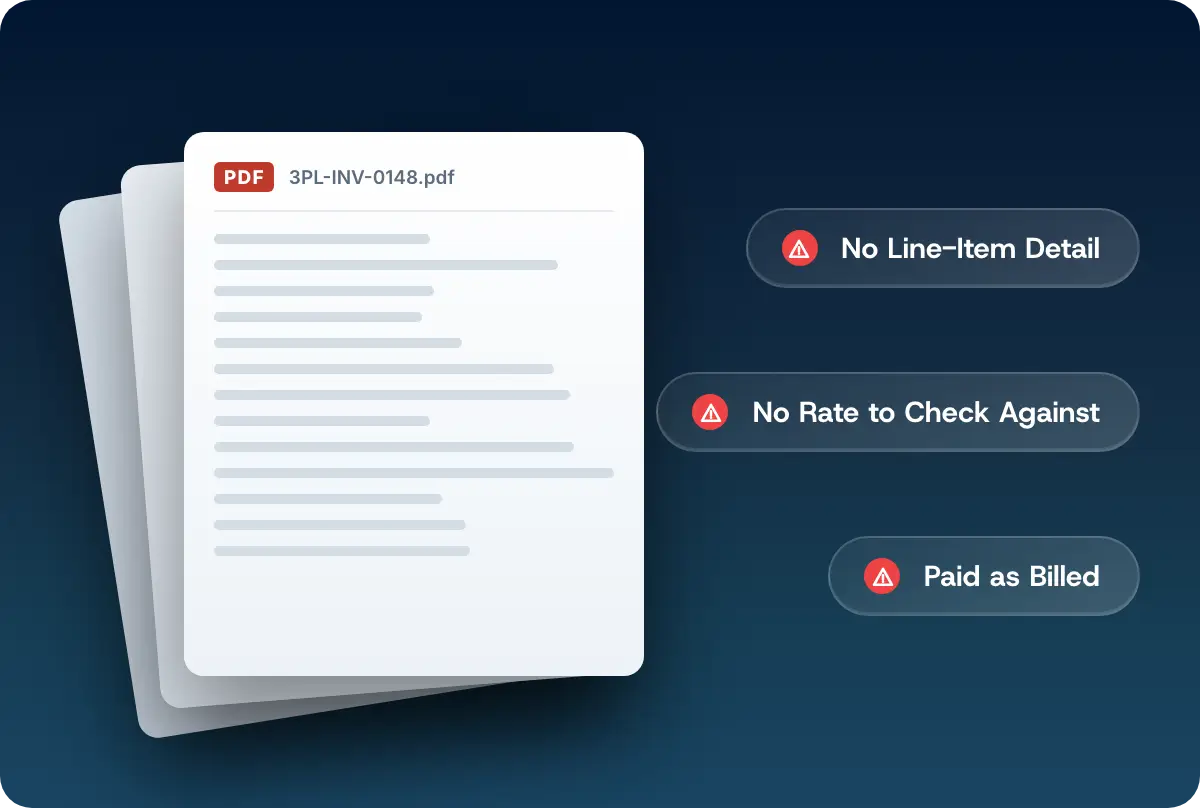
Payment data is main to an audit due to the fact that billings contain the amounts that require to be evaluated. Important fields can include invoice numbers, invoice dates, shipment recommendations, billed services, base transport charges, gas fees, accessorial charges, tax obligations, credit reports, adjustments, and repayment condition. For storage facility and satisfaction activity, organizations might likewise need storage, managing, pick-and-pack, getting, returns, and unique service fee.
Agreement and rate details is worthy of equal attention. A system may need to review discussed prices, minimum costs, dimensional regulations, gas schedules, area interpretations, surcharge conditions, money needs, and efficient dates. Ask how these terms are stood for and maintained, specifically when arrangements differ by provider, client, center, lane, or solution kind. Clear assistance for versioned regulations can assist ensure a billing is analyzed versus the terms that used when the service occurred.
Assess Data Top Quality and Matching Demands
Even qualified audit software depends upon reputable source details. Assessment teams should examine duplicate documents, missing tracking numbers, inconsistent address formats, clashing weights, unit distinctions, insufficient accessorial codes, and day or time-zone inconsistencies. They should also identify which fields are compulsory for matching billings to deliveries, orders, agreements, and proof-of-delivery info.
A strong analysis includes depictive examples as opposed to just clean test files. Use ordinary shipments, exemptions, returns, international motions, multi-package orders, and invoices including credit scores or challenged charges. This exposes whether the system can identify relationships throughout documents and describe why a charge was approved, flagged, or rejected.
Think About Coverage, Controls, and Information Access
The value of audited data expands beyond locating individual discrepancies. Organizations might need summaries by service provider, facility, customer, solution degree, lane, delivery kind, or payment period. They might likewise wish to distinguish recoverable mistakes from valid charges and monitor recurring problems. Validate that the software program can offer beneficial coverage while keeping the transaction-level details required for review.
Data accessibility and governance must become part of the analysis as well. Evaluation individual consents, audit backgrounds, export alternatives, retention practices, and the ability to document choices or corrections. These capacities support partnership amongst logistics, financing, purchase, and operations groups without shedding the initial document or the reasoning behind an adjustment.
Construct an Evaluation List
Prior to picking a system, develop a list that maps each called for data resource and area to an organization function. Include operational occasions, invoices, price contracts, account structures, exception codes, and reporting requirements. Tape-record the anticipated layout, upgrade regularity, liable owner, and any makeover required before the data can be used.
FreightOptics gives 3rd Party Logistics Audit solutions, and its 3pl Audit Software can be taken into consideration along with the company's current systems, partner requirements, and audit procedures. A focused review of information requirements helps businesses select software application that fits their operational setting and sustains regular, explainable payment analysis.
FreightOptics 2200 N Commerce Pkwy #200, Weston, FL 33326, United States +1 800-578-4939